
Side Dishes
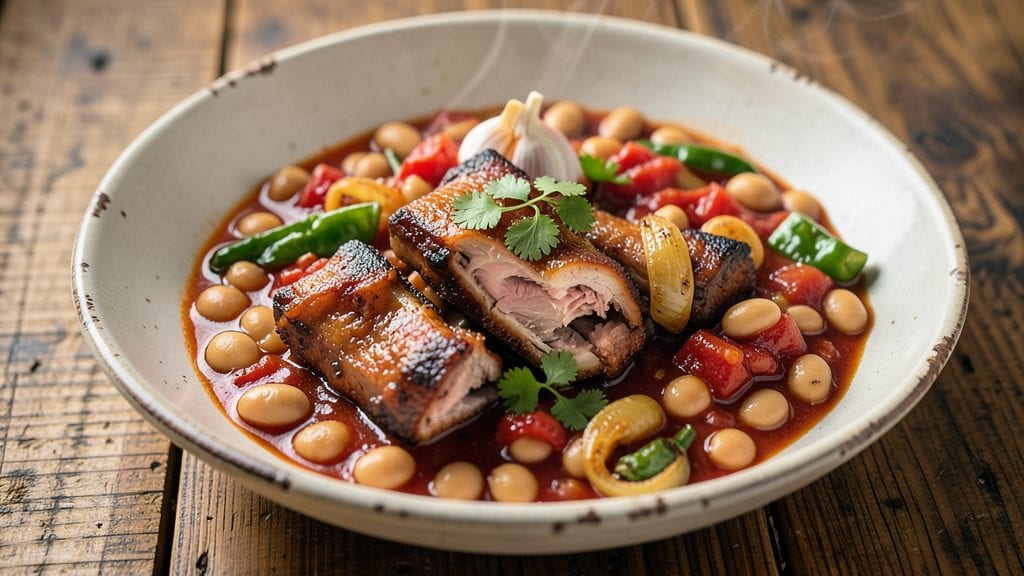
This Puerto Rican beans with pigs feet recipe brings the soul-warming flavors of the island to your table, where slow-braised beans and tender pigs feet create a dish rich in tradition and texture.
The secret lies in hours of simmering, where collagen melts from the pigs feet into the beans, transforming them into a deeply flavorful, hearty side that pairs perfectly with rice and grilled meats.
What makes this recipe special is the sofrito base, a blend of onions, garlic, peppers, and spices that forms the aromatic foundation. The pigs feet add an unmatched depth of flavor and a satisfying bite, while the beans soak up every layer of savory goodness.
This dish is a labor of love, but the results—tender, gelatinous beans with rich, meaty undertones—are worth every minute of effort.
The slow-cooking process is key—it allows the beans to soften and the pigs feet to break down into a creamy, collagen-rich broth that coats every bite. The final dish is a celebration of Puerto Rican comfort food, where each spoonful delivers a burst of tradition and warmth.
Ready to bring this classic to your kitchen?
Perfect for family gatherings, holiday feasts, or whenever you crave a dish that feels like home. The flavors only deepen over time, making it even better the next day. Let’s get started on this collagen-rich tradition!
Ingredients for puerto rican beans with pigs feet
Pantry staples meet Puerto Rican soul—just 14 ingredients for a dish that tastes like home.
| Ingredient | Amount | Notes |
|---|---|---|
| Pigs Feet 🐷 | 2 lb | Fresh or frozen, skin removed |
| Pinto Beans 🌽 | 2 cups | Dried, soaked overnight |
| Yellow Onions 🧅 | 2 whole | Medium size, roughly chopped |
| Green Bell Peppers 🌶️ | 2 whole | Stems and seeds removed |
| Garlic Cloves 🧄 | 6 cloves | Minced, fresh preferred |
| Tomatoes 🍅 | 4 whole | Roma or vine-ripened, chopped |
| Olive Oil 🫒 | ½ cup | Extra-virgin for richness |
| Adobo Seasoning 🌶️ | 2 tbsp | For authentic Puerto Rican flavor |
| Ground Cumin 🌿 | 1 tbsp | Toasted for deeper flavor |
| Bay Leaves 🌿 | 2 whole | Dried, for aromatic depth |
| Salt 🧂 | 1 ½ tsp | Kosher or sea salt |
| Black Peppercorns 🌶️ | 1 tsp | Freshly cracked |
| Fresh Cilantro 🌿 | ¼ cup | Chopped, for garnish |
| Water 💧 | 6 cups | For soaking beans |
Pigs feet are the star here, so source them fresh from a butcher or frozen at Latin markets. Look for feet that are bright pink and firm—avoid any with a strong odor. If using frozen, thaw them overnight in the fridge. The beans? Dried pinto beans give the best texture, but canned in a pinch (just drain and rinse). For the sofrito, fresh bell peppers and tomatoes make all the difference—skip the canned versions here. I always grab extra garlic since it’s the base flavor. And the adobo seasoning? Penzeys or Goya brands are my go-tos for that authentic taste.
No pigs feet? Substitute with smoked pork shoulder (cut into chunks) or even extra beans for a vegetarian version. Running low on adobo? Mix smoked paprika, garlic powder, and a pinch of oregano for a close approximation. The cilantro is optional but adds freshness—skip if you hate it. For the beans, if you forget to soak them overnight, boil for 2 minutes first. The bay leaves? Don’t skip them—they’re key for that deep, earthy flavor. And if you’re short on time, use a pressure cooker to cut the simmering time in half.
This dish only gets better with time, so make a double batch. Store leftovers in the fridge for up to 5 days—the flavors meld beautifully. For freezing, portion into airtight containers and keep for up to 3 months. Reheat gently on the stove with a splash of water to restore moisture. The pigs feet will break down further, creating an even richer broth. Serve with white rice and a cold beer—trust me on this.
Why You'll Love This Recipe
- One-Pot Magic: I swear by this recipe—just toss everything into a pot and let it simmer. The beans soften while the pigs' feet render down, turning crispy at the edges without me having to flip or fuss. Honestly, the cleanup is almost as good as the meal.
- Deep Umami Bomb: That first bite? The pigs' feet add this rich, savory depth that turns ordinary beans into something extraordinary. The garlic and bell peppers brighten it up, but it’s the slow-cooked collagen from the feet that makes it ridiculously good—like a hug in a bowl.
- Weeknight Workhorse: This dish feeds a crowd but doesn’t require a fancy menu. Serve it with rice at a family gathering, pack leftovers for lunch, or even turn it into a taco filling. Between us, it’s the only thing I make when I have a house full of people and zero time.
- Budget-Friendly Feast: Pigs' feet are cheap, and a pound stretches across multiple meals. I make a big batch, freeze half, and pull it out whenever I need a hearty, protein-packed meal. It’s my go-to for stretching groceries without sacrificing flavor—no sad leftovers here.
Step-by-step instructions for Puerto Rican beans with pigs feet
Here's how to create this rich, collagen-packed dish that transforms humble ingredients into a flavorful tradition.
Prepare the Pigs Feet and Soak the Beans
First, if using frozen pigs feet, thaw them completely in cold water for 4-6 hours. Once thawed, rinse them under cold water to remove any blood or impurities. Place the 2 lb pigs feet in a large pot and cover with 6 cups water. Bring to a boil over high heat, then reduce to a simmer and cook for 1 hour to remove any remaining impurities. Drain and rinse again.
While the pigs feet simmer, prepare the 2 cups pinto beans by rinsing them thoroughly under cold water. Place them in a large bowl and cover with plenty of fresh water (about 8 cups). Let them soak overnight in the refrigerator. This overnight soaking ensures they cook evenly and become tender. In the morning, drain and rinse the beans again before using.
Sauté the Aromatics and Build the Base
In a large, heavy-bottomed pot (like a Dutch oven), heat 0.5 cup olive oil over medium heat. Add the roughly chopped 2 whole yellow onions and cook for 5-7 minutes until they begin to soften and turn translucent. Add the 2 whole green bell peppers, cut into chunks, and cook for another 5 minutes until they start to soften.
Stir in the 6 cloves minced garlic and cook for 30 seconds until fragrant. Add the 2 tbsp adobo seasoning and 1 tbsp ground cumin, stirring well to coat the vegetables. The pot should smell rich and earthy—this is where all the flavor begins. Add the 4 whole tomatoes, chopped, and cook for another 3-4 minutes until they break down slightly.
Combine Everything and Simmer Slowly
Add the drained and rinsed 2 cups pinto beans to the pot, stirring to combine with the aromatics. Pour in enough fresh water to cover the beans by about 2 inches—you should have roughly 6 cups total liquid including any water that evaporated during cooking. Add the 2 whole bay leaves, 1.5 tsp salt, and 1 tsp freshly cracked black peppercorns. Stir everything together.
Bring the mixture to a gentle boil over medium-high heat, then immediately reduce the heat to low. Add the cleaned 2 lb pigs feet to the pot, making sure they're fully submerged in the liquid. Cover the pot with a lid and let it simmer gently for 2-2.5 hours. The beans should soften, and the pigs feet will slowly break down, releasing collagen-rich gelatin that thickens the beans into a rich, creamy texture.
Finish and Adjust the Seasoning
After 2-2.5 hours, check the beans for tenderness. They should be soft but still hold their shape. If they need more time, continue simmering, adding a little more water if necessary to keep them covered. Once the beans are tender, carefully remove the pigs feet with tongs and place them on a cutting board. Use two forks to shred the meat into bite-sized pieces, discarding any tough skin or connective tissue.
Return the shredded pigs feet to the pot and stir well. Taste the beans and adjust the seasoning if needed—add more salt if they taste bland, or a splash of water if they're too thick. Remove the 2 whole bay leaves before serving. Let the beans sit off the heat for 10 minutes to allow the flavors to meld together.
Serve with Fresh Cilantro and Enjoy
Ladle the beans into bowls and garnish each serving with 0.25 cup chopped fresh cilantro. The cilantro adds a bright, fresh contrast to the rich, savory beans. Serve immediately with warm rice or crusty bread to soak up every last bit of that flavorful broth. This dish tastes even better the next day as the flavors deepen, so consider making extra for leftovers.
Pro Tips For Making Puerto Rican Beans With Pigs Feet
- BLANCH FEET FIRST: Drop those pigs feet in boiling water for 5 minutes before braising—this loosens the skin and makes peeling them later a breeze. I used to skip this and spent 20 minutes scrubbing stubborn bits off raw feet; now I just slide the skin right off after blanching.
- SOAK BEANS OVERNIGHT: Pinto beans need at least 8 hours soaking, but don’t drain them until you’re ready to cook—just swap the water once. I learned this the hard way when my beans turned mushy because I rushed the soak, and now I keep them in their soaking liquid until the last minute.
- LOW AND SLOW WINS: After the initial sear, drop the heat to 275°F (135°C) and let the feet cook for 3 hours uncovered. This renders the fat properly and keeps the beans from turning to glue—no, your slow cooker won’t cut it here.
- CHAR THE VEGETABLES: Blacken the onions and peppers in batches before adding them to the pot—this adds depth that raw veggies just can’t match. Sounds weird, but it works: the caramelized bits stick to the beans and make every bite richer. (Yes, even if you’re impatient like me.)
Creative variations of these flavors
Island-Inspired Twists
Swap pigs feet for chicken feet (common in other Caribbean styles) to create a lighter, more approachable version. The collagen-rich broth still forms, but the texture becomes slightly more delicate.
I’ve tested this with 2 lbs chicken feet—simmer them for 1.5 hours instead of 2, then proceed with the same method. The result? A dish that’s still hearty but with a milder bite. 🌴
Spicy Sofrito Kick
For a hotter, smokier variation, add 1 tbsp of Puerto Rican ají dulce paste (or ½ cup diced habanero) to the sofrito base. This transforms the dish into a spicy beans version that’s popular in coastal regions.
Balance the heat with a splash of lime juice before serving. I like to serve this with cooling avocado slices on top to tame the fire. 🌶️
Vegetarian Adaptation
Skip the pigs feet entirely and replace them with extra beans (add 1 cup more dried pinto beans) and smoked tofu (cut into chunks). Boost umami with 2 tbsp soy sauce and 1 tsp liquid smoke.
Simmer for 1.5 hours instead of 2.5, stirring occasionally to prevent sticking. The result is a protein-packed, veggie-forward version that still delivers that rich, creamy texture. 🌱
Slow Cooker Shortcut
For a hands-off version, use a 6-quart slow cooker on LOW for 8 hours (or HIGH for 5 hours). Add all ingredients as directed, but reduce the liquid by 1 cup since slow cookers evaporate less.
The pigs feet will break down completely, creating a thicker, more gelatinous consistency—perfect for meal prep. I often double this batch for easy leftovers. ⏰
Coconut Milk Fusion
Stir in ½ cup coconut milk during the final 30 minutes of simmering for a tropical twist. This adds a subtle sweetness that pairs beautifully with the smoky adobo and cumin.
Garnish with toasted coconut flakes for extra texture. This variation works especially well with grilled fish or jerk chicken on the side. 🥥
Protein Swap Options
Need alternatives to pigs feet? Try smoked ham hocks (add 1 tbsp apple cider vinegar to balance richness) or beef shank chunks (simmer for 3 hours instead of 2.5). For a seafood twist, use shrimp shells (simmer for 1 hour first to extract flavor, then discard).
Each swap changes the depth of flavor—experiment to find your favorite! 🦞
Nutrition facts
Frequently asked questions
Why do I need to soak the beans overnight?
Overnight soaking is crucial for two reasons: it softens the beans and removes anti-nutrients that can cause digestive discomfort. Dried pinto beans need this time to rehydrate properly, ensuring even cooking. If you forget, you can soak them for at least 8 hours or boil them for 2 minutes first to speed up the process.
Can I use canned beans instead of dried?
Yes, but with adjustments. Use 4 cups drained canned pinto beans and reduce the cooking time to 1.5 hours (since they're pre-soaked). However, dried beans develop deeper flavor through the slow cooking process, so they're preferred for authenticity. Rinse canned beans well to remove excess sodium.
How do I know when the pigs feet are fully cooked?
The pigs feet are done when they're fork-tender and the meat pulls away from the bone easily. After 2-2.5 hours of simmering, test by piercing a foot with a fork—if it slides in smoothly, they're ready. The meat should be soft but not mushy, and the broth should be thickened with collagen.
What if my beans are too thick or too thin?
For thick beans, add ½ cup warm water and simmer 10 more minutes. If too thin, remove the lid and simmer uncovered for 15 minutes to reduce the liquid. The ideal consistency should coat the back of a spoon but still be spoonable. Adjust seasoning last—salty beans can't be fixed, but bland ones can get more salt.
Can I make this recipe in an Instant Pot?
Use the sauté function for the aromatics, then add all ingredients and cook on high pressure for 30 minutes. Quick-release the pressure, then shred the pigs feet and return them to the pot. Finish with 10 minutes on keep warm to meld flavors. The texture will be slightly different but still delicious.