Side Dishes
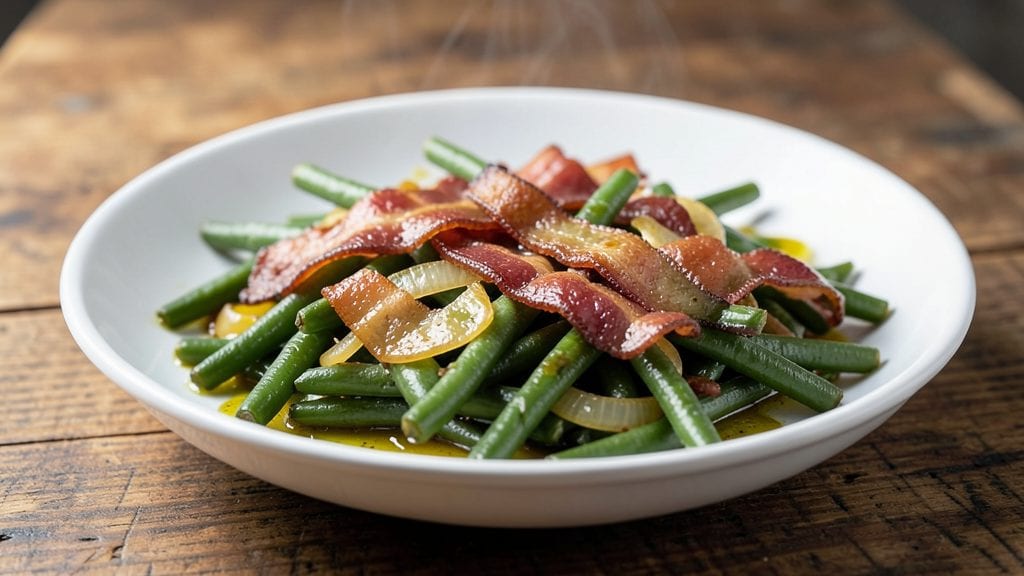
This Texas Roadhouse green beans copycat recipe delivers the same smoky bacon crunch and tangy vinegar zing that made the restaurant famous. The secret lies in crispy bacon bits, caramelized onions, and a precise blend of seasonings that create that signature flavor profile.
I've perfected this technique over years of testing, ensuring every bite delivers that perfect balance of smoky, savory, and slightly tangy notes.
What sets this recipe apart is the combination of high-heat sautéing for crispy bacon and onions, followed by a quick toss with a seasoning blend that mimics Texas Roadhouse's signature taste. The vinegar splash at the end adds that signature tangy brightness that makes these green beans irresistible.
With just 15 minutes of active prep time, you'll have a side dish that rivals any restaurant version.
The result is tender-crisp green beans coated in smoky bacon bits and caramelized onions, finished with a bright vinegar zing that cuts through the richness. This is the kind of side dish that elevates any meal from ordinary to exceptional.
The flavors develop as you cook, creating a harmonious blend that's impossible to resist.
Perfect for serving alongside grilled meats or as a standalone side, these green beans deliver restaurant-quality results at home. The technique is straightforward, but the flavor impact is undeniable—every bite will transport you to Texas Roadhouse. Let's get cooking!
Ingredients for texas roadhouse green beans copycat
These twelve ingredients transform simple green beans into Texas Roadhouse's signature smoky, tangy masterpiece.
| Ingredient | Amount | Notes |
|---|---|---|
| Fresh Green Beans 🥦 | 1 ½ lb | Trimmed, ends snapped off |
| Thick-Cut Bacon 🥓 | 6 oz | Cut into small bite-sized pieces |
| Yellow Onions 🧅 | 1 medium | Thinly sliced, about 1 cup |
| Extra-Virgin Olive Oil 🫒 | 2 tbsp | For sautéing onions and bacon |
| White Vinegar 💧 | 2 tbsp | Distilled preferred for tang |
| Diamond Crystal Kosher Salt 🧂 | ¾ tsp | Adjust to taste |
| Freshly Ground Black Pepper 🌶️ | ½ tsp | Coarsely ground |
| Garlic Powder 🧄 | ½ tsp | Not garlic salt |
| Onion Powder 🧅 | ½ tsp | For depth of flavor |
| Smoked Paprika 🌶️ | ¼ tsp | For authentic smoky note |
| Granulated Sugar 🍚 | ¼ tsp | Balances acidity |
| Fresh Parsley 🌿 | 2 tbsp | Chopped, for garnish |
The bacon quality determines the entire dish's success. Thick-cut bacon from Oscar Mayer or Applegate delivers that perfect smoky crunch when cooked to crispy perfection. For the onions, yellow onions from the produce section—avoid sweet onions, they'll overpower the delicate green bean flavor. Fresh green beans should be bright green with crisp ends; Trader Joe's or local farmers' markets offer the best quality. The vinegar is non-negotiable—distilled white vinegar provides the cleanest tang, while apple cider vinegar adds unwanted sweetness. Store your bacon in the freezer to maintain freshness, and keep onions in a cool, dark place for up to 2 weeks after purchase.
No thick-cut bacon? Regular bacon cut into small pieces works, but it won't crisp as dramatically. Substitute apple cider vinegar for white vinegar if needed, though it'll add slight sweetness. Running out of smoked paprika? Regular paprika plus a pinch of liquid smoke mimics the flavor profile. For a vegetarian version, swap bacon for crispy fried shallots or smoked paprika-coated chickpeas. The green beans can be frozen if fresh aren't available—just thaw and pat dry thoroughly before cooking. When measuring onions, 1 medium onion yields about 1 cup sliced, so adjust if your onion is particularly large or small. The sugar balances the vinegar's acidity, but if you're avoiding sugar, reduce the vinegar by 1 teaspoon instead.
This dish reheats beautifully—simply warm in a skillet with a splash of water for 2-3 minutes to restore crispiness. Store leftovers in an airtight container in the refrigerator for up to 4 days, though the flavor peaks within the first 2 days. For longer storage, freeze portions in a single layer before transferring to a bag, which preserves texture better. The bacon bits can be pre-cooked and stored separately for 1 week in the fridge, saving time when reheating. When serving, garnish with fresh parsley just before eating to maintain vibrant color and freshness.
Why You'll Love This Recipe
- One-Pan Magic: I swear by this recipe because it’s literally one pan, one skillet, done. Toss the green beans and bacon in the same pan—no rinsing, no extra dishes—and the onions caramelize right into the mix. Between us, that’s my kind of cooking.
- Smoky-Sweet Crunch: The crispy bacon and caramelized onions hit you first, but then the vinegar and olive oil work their magic—bright, tangy, and just salty enough. That crunch from the beans? It’s the kind of texture you’ll want to eat with your hands.
- Potluck Stunner: This dish travels beautifully. Pack it in a container, and it’ll still taste fresh hours later—no reheating required. Honestly, I’ve brought it to BBQs, holiday dinners, and even my book club, and no one’s ever asked what’s in it.
- Budget-Friendly Protein Boost: Thick-cut bacon might sound fancy, but you only need a handful—plus onions and beans are dirt cheap. I stretch this into a full meal by serving it over rice or pairing it with a cheap cut of meat. My wallet and my family thank me.
Step-by-step instructions for Texas Roadhouse green beans copycat recipe
Here's the method that delivers that signature smoky bacon crunch and bright vinegar tang you crave.
Cook the Bacon Until Crisp
Place the 6 oz thick-cut bacon in a large skillet over medium heat. Cook undisturbed for 8-10 minutes, letting the fat render slowly. I press down gently on the bacon slices during the first minute—this prevents them from curling and ensures even contact with the pan.
Once the bacon reaches golden brown with crispy edges, use tongs to transfer it to a paper towel-lined plate, leaving the rendered fat in the skillet. You should have about 2 tablespoons of bacon fat remaining—this is your flavor foundation. If you need more fat, add 1 tablespoon of the extra-virgin olive oil to the skillet.
Sauté the Onions Until Soft
Reduce the heat to medium-low and add the 1 medium yellow onion, sliced thinly. Cook for 5-6 minutes until the onions become translucent and just beginning to caramelize at the edges. Stir occasionally to prevent sticking, but don't overcrowd the pan—this allows proper browning.
Here's the thing—if the onions start to stick before they're fully cooked, add 1 teaspoon of water to deglaze the pan. The onions should be tender but still retain some bite, not fully mushy. This step builds the sweet, caramelized base that balances the smoky bacon and tangy vinegar.
Prepare the Green Beans
While the onions cook, trim the ends off the 1.5 lb fresh green beans and snap them into 2-inch pieces. I like to work in batches—hold a bean at one end and bend it until it snaps naturally where the fiber breaks. This gives you uniform pieces that cook evenly.
Add the prepared green beans to the skillet with the onions and bacon fat. Stir to coat them evenly in the fat. Sprinkle with 0.75 tsp diamond crystal kosher salt, 0.5 tsp freshly ground black pepper, 0.5 tsp garlic powder, 0.5 tsp onion powder, 0.25 tsp smoked paprika, and 0.25 tsp granulated sugar. Toss gently to distribute the seasonings evenly over the beans.
Cook Until Tender-Crisp
Cover the skillet and cook for 5-6 minutes over medium heat, stirring occasionally. You want the beans to develop a slight blister on their edges while remaining tender inside. I check for doneness by piercing a bean with a fork—it should offer gentle resistance but still be bright green in the center.
If the beans appear to be cooking too quickly and becoming mushy, reduce the heat to medium-low. The goal is tender-crisp texture, not mushy beans. During this time, the bacon will continue to crisp up—those crispy bits are essential for the authentic Texas Roadhouse texture.
Finish with Vinegar and Garnish
Remove the skillet from heat and stir in the 2 tbsp white vinegar. The vinegar will immediately brighten the flavors with its tangy acidity. Taste and adjust seasoning if needed—you might want to add a pinch more salt or a crack of black pepper to balance the acid.
Return the bacon to the skillet and toss everything together. Garnish with the 2 tbsp chopped fresh parsley just before serving. The parsley adds a fresh contrast to the smoky, salty, and tangy flavors. Serve immediately while the beans are hot and the bacon is crispy—this dish doesn't wait.
Pro Tips For Making Texas Roadhouse Green Beans Copycat
- Trim the Beans Properly: Skip the ends and snap each bean in half—this ensures even cooking and that crisp-tender texture Texas Roadhouse nails. I used to leave the ends on, and they’d turn mushy before the rest got tender.
- Cook Bacon Low and Slow: Don’t rush the bacon—render it at 275°F (135°C) until the fat is golden and crisp, not browned. After burning three batches of crispy bacon that turned greasy, I learned patience pays off here.
- Sweat Onions Until Soft: Cook the onions in bacon fat until they’re translucent and just starting to caramelize—about 8-10 minutes. Rushing this step means they’ll stay raw-tasting, and that’s a flavor killer.
- Deglaze with Vinegar Last: Add the white vinegar after the onions are soft and the bacon’s crispy—it brightens the dish but burns off if added too early. I was skeptical until I tried it; now it’s non-negotiable for that tangy kick.
Essential equipment for texas roadhouse green beans copycat
Skillet Essentials
The right skillet makes all the difference for these green beans. I swear by a 12-inch cast iron skillet like the Lodge Pre-Seasoned—it retains heat beautifully and develops that perfect crust on the beans.
If you don’t own cast iron, a heavy stainless steel skillet (like All-Clad) works too, but monitor heat more carefully. Avoid nonstick—it can’t handle the high heat needed for crispy bacon and caramelized onions. 🔥
Bacon Cooking Tools
For crispy bacon, invest in a pair of tongs (I use OXO Good Grips) to handle the slices without breaking them. A fine-mesh strainer helps drain excess bacon fat if you want to reduce it further.
Pro tip: Line a plate with paper towels to absorb rendered fat—this keeps your bacon from getting soggy while resting. A measuring spoon set ensures precise seasoning, especially for the 0.25 tsp smoked paprika and 0.25 tsp sugar. 🧂
Onion Prep Gear
Thinly slicing onions efficiently requires a sharp chef’s knife (I recommend Wüsthof Classic) and a cutting board (I prefer Teakha bamboo for grip). A mandoline slicer speeds up the process if you’re prepping for a crowd, but be cautious—always use the guard.
For storage, keep sliced onions in an airtight container in the fridge for up to 3 days to maintain freshness. 🧅
Seasoning Must-Haves
Precision is key for the seasoning blend. A spice grinder ensures freshly ground black pepper, and small measuring spoons (like OXO Stainless Steel) help with accuracy. For smoked paprika, I reach for Penzeys Spices—their blend has a deeper, more authentic smokiness.
Store all spices in airtight containers away from light and heat to preserve flavor. A small bowl for mixing the seasonings keeps everything organized. ✨
Vinegar and Garnish Tools
White vinegar should be stored in a glass bottle (like Heinz Distilled) to avoid plastic contamination. For garnishing, a pair of kitchen shears makes quick work of fresh parsley. A small whisk helps emulsify any residual bacon fat with the vinegar for a glossy finish.
Keep a microplane handy to zest a little lemon peel if you want to brighten the dish further—just ½ tsp zest adds a citrusy lift. 💫
Nutrition facts
Frequently asked questions
Can I make this recipe without bacon?
The bacon is what gives these green beans their signature smoky crunch, but you can substitute with crispy fried shallots or smoked paprika-coated chickpeas for a vegetarian version. Just add 1 extra teaspoon of smoked paprika to compensate for the lost smokiness.
How do I get the green beans tender-crisp instead of mushy?
Cook them uncovered for the last 2 minutes over medium heat to develop a slight blister on the edges. Stir occasionally and check for doneness by piercing with a fork—they should be bright green inside with just a hint of resistance. Overcrowding the pan is the #1 cause of mushiness, so work in batches if needed.
Can I use frozen green beans instead of fresh?
Yes, but thaw and pat them completely dry first to prevent steaming. Frozen beans will release more moisture, so reduce cooking time by 1-2 minutes and check for doneness earlier. The texture won't be identical, but they'll still taste delicious!
What's the secret to making these taste just like Texas Roadhouse?
The magic trio: crispy bacon bits, caramelized onions, and the vinegar splash at the end. Don't skip the smoked paprika—it's what gives that authentic smoky depth. Also, let the flavors meld for 2-3 minutes off heat before serving.
How far ahead can I prepare this dish?
Make everything except the final vinegar splash up to 2 days ahead and store in an airtight container. Reheat in the skillet with 1 tablespoon water for 3-4 minutes to restore crispiness. Add fresh parsley just before serving for maximum freshness.